


Does lifting a truck reduce gas mileage?
If you’re thinking about lifting your truck, it can be helpful to know how this decision impacts your gas mileage. Below, we discuss everything you need to know about lifting trucks, including this process’s benefits and the impact it has on your vehicle’s gas mileage.
What Is a Lift Kit?
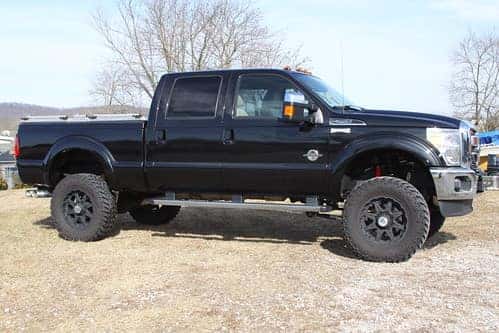
Image by DiamondBack Covers licensed under CC BY-SA 2.0
A lift kit lets vehicle owners create space between their vehicle’s body and its axles. Vehicle manufacturers and specialty shops most often install lift kits on trucks and SUVs. A lift kit isn’t essential to a truck’s performance, but drivers can choose to install it or purchase a vehicle with one already installed on it.
What Types of Lift Kits Are There?
There isn’t a single way to lift your truck. There are three distinct types of lift kits that you can choose from to elevate your truck:
Leveling Kit
A leveling kit levels a truck’s front end with its rear end. By default, truck manufacturers typically design their vehicles so that the rear sits an inch or two taller than the front. This design is intentional, as it prevents sagging when the truck hauls a heavy load.
Some truck drivers don’t like how this design looks. They can use a leveling kit to make both the front and rear ends even with each other. This kit is typically inexpensive and comes with strut spacers that rest between the truck’s upper leaf spring and chassis. With a leveling kit, a truck has more ground clearance between the driving surface and the front bumper.
Body Lift Kit
A body lift kit elevates a truck’s body off of its frame. Most body lift kits provide a boost anywhere between 1 and 3 inches. By default, most trucks have a body-on-frame engineering design. When a manufacturer or specialty shop installs a body lift kit, they detach the truck’s body from its frame so that they can insert blocks to create separation.
A body lift kit doesn’t impact the vehicle’s suspension system. It may affect handling and make it more difficult for a driver to complete sharp turns. As long as a driver is aware of this condition, a body lift kit won’t negatively affect the truck’s handling.
Suspension Lift Kit
A suspension lift kit is the most intricate way to lift a truck. It uses suspension components to elevate a truck’s frame higher off its axles. Depending on the specific kit, you may be able to achieve a lift between 1 and 12 inches. Because a suspension lift kit increases the suspension’s height, a manufacturer may need to make adjustments to certain underbody components like the brake lines or driveshaft.
What Are the Benefits of Lifting a Truck?
Here are some benefits of lifting a truck:
Provides Increased Separation
One reason drivers opt to lift their trucks is because of the increased space it creates between a vehicle’s axles and its body. With this additional space, a driver has the freedom to add larger wheels and tires. If a driver opts for a suspension lift kit, they can create significant room between their vehicle’s frame and the road. This can be especially helpful for drivers who plan to go on off-road adventures. With a higher frame, they can drive over tree branches and rocky terrain without worrying about damaging their truck’s bumper and underbody parts.
Increases the Driver’s Field of Vision
Many drivers choose to lift their trucks because it allows them to sit higher off the ground. They can assume a more confident and commanding driving position. They can also see over other cars on crowded streets.
Improves the Truck’s Aesthetics
Some drivers lift their trucks because they enjoy vehicles that sit taller. A lift kit can create a truck that has a more stylish and bolder appearance. Just take a look at what’s available in the Rocky Ridge Lifted Truck line, and you’ll see exactly what we mean.
Does Lifting a Truck Lower the Gas Mileage?
Lifting a truck may lower its gas mileage for a couple of reasons. The first reason is that it can add unnecessary weight to your truck. A lift kit can be heavy, so adding this extra weight means that your truck has to work harder to move.
The second reason that a lift kit can lower a truck’s gas mileage is that it increases wind resistance. When you lift your truck’s frame further away from the ground, you create more room for air to circulate around underneath it. This extra wind resistance may cause your truck to work harder and decrease its fuel efficiency.
Most truck owners view this decrease in fuel efficiency as a small price to pay for a lifted vehicle. Many truck owners will trade in their current vehicle for a lifted truck to reap the benefits of a raised vehicle, including improved aesthetics and more ground clearance.
How To Manage Decreased Fuel Efficiency
Although lifting a truck may lower the gas mileage you get, there are a few easy ways to manage this decreased fuel efficiency:
- Be wary of heavy-foot driving: Instead of putting the pedal to the metal, try to accelerate slowly. Aim to keep your RPM between 1,500 and 2,000 as you speed up to increase your fuel efficiency.
- Limit the items you carry in your truck: Even though a lift kit increases your truck’s weight, you can limit how many things you carry in your truck. Instead of turning your truck into a storage area, only carry what you absolutely need for each trip.
- Monitor your tire pressure: Check your manufacturer’s suggestions for your tire pressure. If your tires don’t have enough air, you may experience up to a 3% decrease in fuel efficiency.
- Fuel up when it’s cooler outside: Instead of fueling up in the middle of the day, do so first thing in the morning or later at night after the sun sets. Fuel is denser when it’s colder, and it dispenses by volume, which can help you increase your gas mileage.
If you’ve decided that a lifted truck is right for you, we encourage you to contact our team at Granger Chevrolet. We’ll introduce you to our inventory of lifted trucks and discuss financing options so that you can get the truck of your dreams at an affordable price.
0 comment(s) so far on Does lifting a truck reduce gas mileage?