Open Today Sales: 9 AM-7 PM




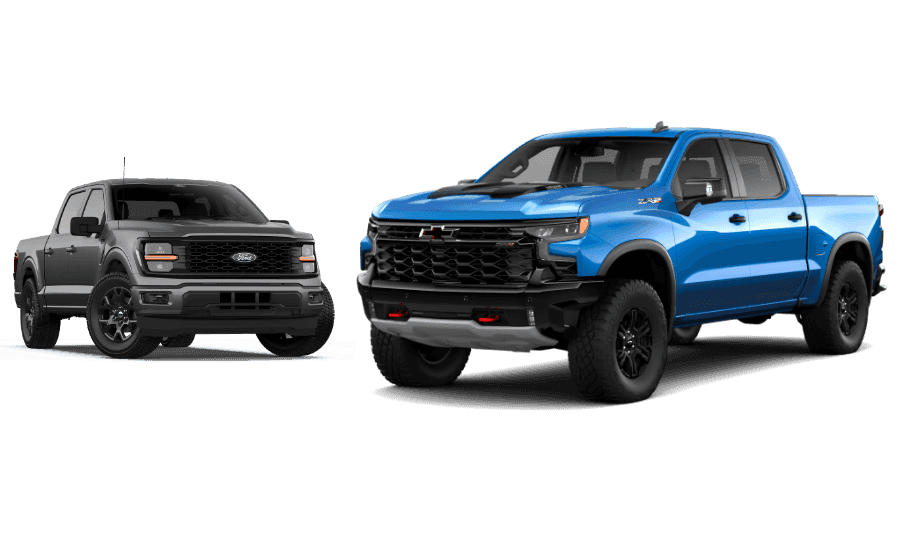
The stiff competition between the Chevrolet Silverado 1500 and Ford F-150 has been going on for decades. In 2026, this matchup takes on new significance as the Chevy edges out the Ford in several key areas, as we’ll explain in detail on this page. Note that unless we state otherwise, all of our comparisons involve the 2026 editions of the Silverado 1500 WT (Work Truck) and F-150 XL, both with four-wheel drive, a crew cab, and a short cargo bed. This comparison of base trims is especially significant for first-time truck buyers who are looking for an affordable version but may not have established loyalty to either brand as yet.
The entry-level Silverado is more affordable with its price tag of $46,000, while the F-150 starts at $47,270. Of course, there’s more to having a truck than upfront costs: the Chevy also has lower ownership costs. According to Edmunds, over the long term (five years and 15,000 miles of average annual mileage), the Silverado costs $0.72 per mile to operate, compared to $0.74 for the F-150. Helping keep these costs down are Chevy’s lower financing rates, taxes, fees, average insurance rates, and expected maintenance expenses.
Good warranty coverage will also save owners money in the long run. Chevrolet and Ford offer comparable warranties (three years or 36,000 miles for bumper-to-bumper coverage and five years or 60,000 miles for powertrain protection), with one notable exception. A Silverado with the base TurboMax engine comes with a powertrain warranty that extends to 100,000 miles (or five years).
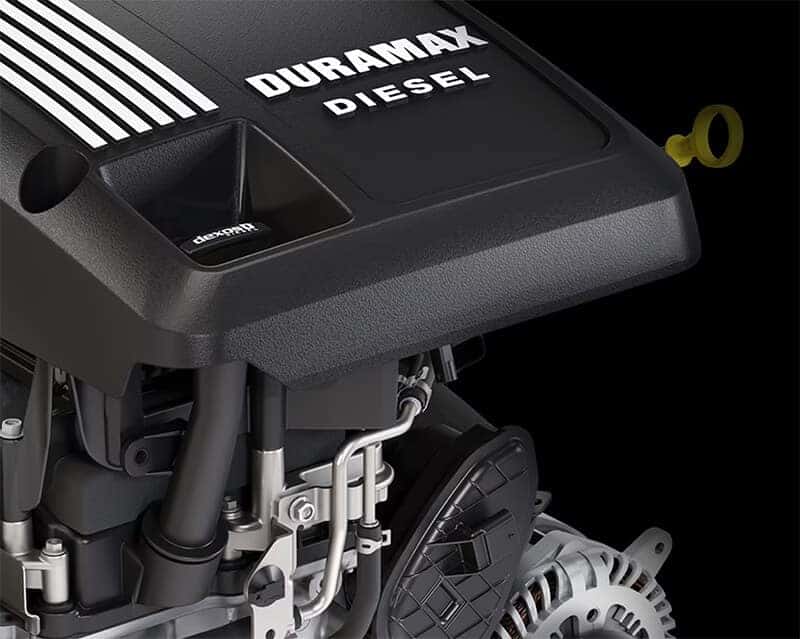
Both vehicles come standard with turbocharged 2.7-liter gasoline engines, but the similarities end there. The Silverado’s inline four-cylinder TurboMax powerplant produces 310 horsepower and 430 lb.-ft. of torque. While the F-150’s EcoBoost V6 makes 325 horsepower, it falls short with 400 lb.-ft. of torque output. Only the Silverado 1500 is available with a 3.0-liter Duramax turbodiesel engine (on the Custom Trail Boss and higher trims); Ford discontinued the Power Stroke diesel in the F-150 after the 2021 model year.
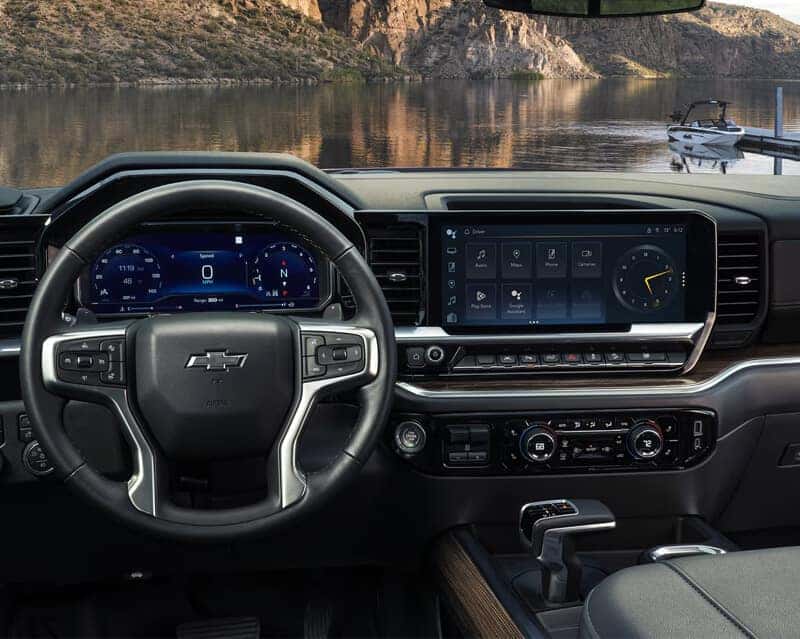
Unsurprisingly, both pickups offer similar cabin room; there’s less than an inch difference in many interior dimensions. However, the Silverado offers a more spacious front row, with 43.0 inches of headroom, compared to 40.8 inches for the F-150. The Chevy also has 44.5 inches of front legroom, edging out the Ford’s 43.9 inches.
Consumers on Edmunds gave the Silverado 1500 an average overall score of 4.4 out of 5, compared to 4.1 for the F-150. On the professional side, the 2026 Silverado 1500 earned an overall score of 83 out of 100 from J.D. Power, narrowly topping the F-150’s rating of 82. J.D. Power also gave Chevrolet a “Great” dealership experience score of 84 out of 100, compared to Ford’s “Average” ranking of 80.